🔬 Analytical Perspective
This analysis examines Google’s strategic acquisition of clean energy company Intersect Power for $4.75 billion to support artificial intelligence data center expansion. It explores how AI’s escalating power demands are forcing technology companies to vertically integrate into energy production, the implications for renewable energy markets, and the broader trend of tech giants becoming major energy players. This represents strategic analysis of corporate energy integration for AI infrastructure based on reported business developments.
Google’s $4.75 Billion Energy Bet: Buying Power Plants to Fuel AI’s Insatiable Data Center Demands
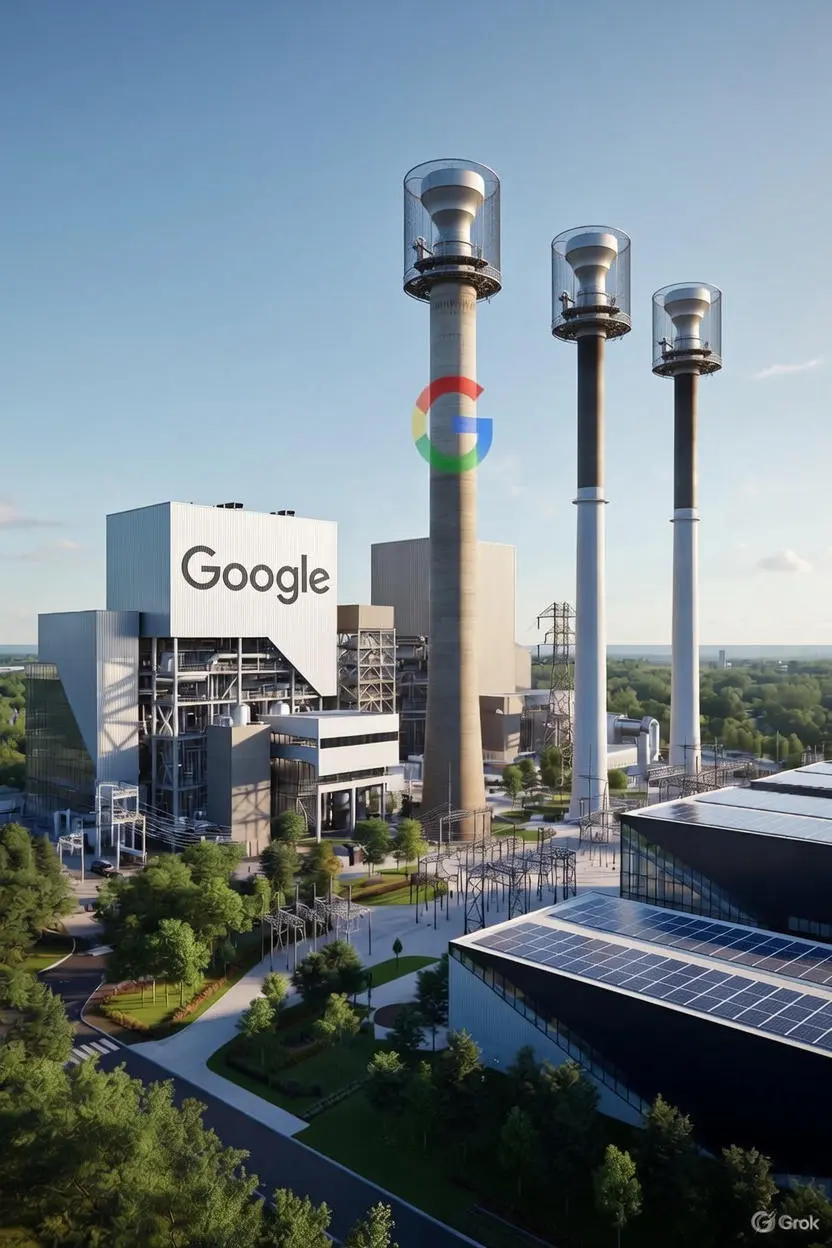
In a landmark move highlighting artificial intelligence’s escalating energy requirements, Google has acquired clean energy company Intersect Power for $4.75 billion, significantly expanding its energy generation capacity to power growing AI data center operations. This acquisition represents one of the largest corporate investments in renewable energy infrastructure and signals fundamental shift in how technology companies approach power sourcing—moving from electricity purchasers to electricity producers as AI computational demands strain existing grid capacities and reshape energy economics.
Google’s $4.75 billion acquisition of Intersect Power represents more than corporate
investment—it’s strategic recognition that AI’s future depends on solving energy
infrastructure challenges at unprecedented scale. As data centers for AI training
and inference consume electricity comparable to small nations, technology companies
face choice: wait for utilities to expand capacity or become utilities themselves.
Google’s move suggests industry is choosing the latter path.
Three Strategic Dimensions of the Acquisition
Google’s energy acquisition addresses multiple strategic challenges simultaneously:
⚡ Capacity Guarantee
Securing reliable, scalable power for AI data centers amid growing competition for limited grid capacity, particularly in regions like the American Southwest where both technology companies and population growth strain existing infrastructure.
🌿 Sustainability Commitment
Maintaining carbon-neutral operations while dramatically increasing energy consumption—Intersect Power’s solar and storage projects provide renewable capacity supporting Google’s 2030 carbon-free energy goals despite AI’s exponential power demands.
💰 Economic Control
Managing energy costs that represent growing portion of data center operational expenses—owning generation assets provides price stability and potential competitive advantage as electricity markets experience volatility from AI-driven demand growth.
The AI Energy Challenge: Scale and Timing
The AI Energy Imperative Driving Corporate Action:
- Exponential Consumption Growth: Advanced AI models require 10-100x more energy per training run than previous generations, with inference demands scaling with user adoption
- Grid Capacity Limitations: Utility infrastructure expansions require 5-10 year lead times while AI capacity needs emerge over 12-24 month cycles
- Geographic Concentration: AI data centers cluster in regions with favorable conditions (cooling, connectivity, incentives) creating localized grid stress
- Competitive Scarcity: Limited suitable data center locations with available power creating strategic resource competition
- Regulatory Pressure: Sustainability commitments and emissions regulations requiring clean energy solutions despite massive consumption increases
Industry-Wide Energy Strategy Comparison
Different technology companies are pursuing varied approaches to AI’s energy challenge:
| Company | Energy Strategy | Key Investments/Approaches |
|---|---|---|
| Vertical Integration | $4.75B Intersect Power acquisition, owning generation assets | |
| Microsoft | Power Purchase Agreements | Long-term contracts with renewable developers, nuclear partnerships |
| Amazon | Mixed Portfolio | Renewable projects, grid investments, efficiency innovations |
| Meta | Efficiency Focus | Advanced cooling systems, chip optimization, renewable matching |
Intersect Power Assets and Strategic Value
The acquisition brings significant energy infrastructure to Google’s portfolio:
Key Assets Included in Acquisition:
- Solar Generation Capacity: Multiple utility-scale solar farms across sun-rich regions with combined capacity exceeding 2 gigawatts
- Energy Storage Systems: Battery storage facilities enabling renewable energy utilization during non-daylight hours and grid stabilization
- Development Pipeline: Projects in advanced development stages providing near-term capacity expansion opportunities
- Grid Interconnections: Established connections to transmission infrastructure in strategic locations for data center deployment
- Operational Expertise: Team with experience in renewable project development, construction, and management
Energy and Technology Sector Perspectives
“Google’s acquisition of Intersect Power represents tipping point in technology industry’s relationship with energy infrastructure. When a software company spends nearly $5 billion to become a power company, it signals that AI’s energy requirements have reached scale where traditional utility-customer relationships no longer suffice.” — Michael Chen, Energy Infrastructure Analyst
“From technology strategy perspective, this move acknowledges that energy has become strategic resource rather than commodity input. Just as semiconductor availability constrained computing progress in previous eras, electricity availability now threatens to constrain AI advancement. Controlling generation assets provides competitive advantage beyond mere cost management.” — Sarah Johnson, Technology Strategist
“The renewable energy market implications are profound. Technology companies represent new class of energy buyers with different characteristics than traditional utilities—faster decision cycles, higher risk tolerance, and massive capital resources. This changes project economics, development timelines, and potentially accelerates energy transition through unprecedented demand signals.” — David Park, Renewable Energy Economist
Broader Implications and Industry Impact
- 🏭 Utility Sector Transformation: Traditional utilities facing new competitor class with different operational models and capital structures
- 📈 Energy Market Evolution: Technology company demand creating new pricing dynamics and investment patterns in generation assets
- 🌍 Sustainability Acceleration: Corporate renewable procurement potentially accelerating clean energy adoption beyond policy-driven timelines
- ⚖️ Regulatory Considerations: New questions about technology company roles in regulated energy markets and grid operations
- 🔌 Infrastructure Integration: Challenges integrating corporate generation assets with public grid operations and planning
Forward Analysis: The 2026 Energy-Tech Convergence
Google’s $4.75 billion energy acquisition suggests several 2026 developments. First, similar moves by other technology companies as AI energy demands continue escalating. Second, increased competition for renewable energy assets and development opportunities. Third, regulatory attention to technology company roles in energy markets. Fourth, innovation at energy-technology intersection including advanced storage, grid integration, and efficiency technologies.
The strategic landscape may evolve toward differentiated approaches—some companies vertically integrating into generation, others partnering through innovative contracts, others focusing on efficiency breakthroughs. Success may depend not just on securing energy but on optimizing across multiple dimensions: cost, reliability, sustainability, and scalability as AI demands continue their exponential trajectory.
🧠 AIROBOT Analysis
Google’s Intersect Power acquisition represents logical corporate response to fundamental constraint emerging in AI advancement: energy availability. As AI model size and usage grow exponentially, energy requirements scale correspondingly, creating bottleneck where computational capability outpaces electricity infrastructure development. Vertical integration into energy production addresses this constraint directly rather than relying on external market solutions.
From strategic perspective, the move illustrates how AI is reshaping traditional industry boundaries. Technology companies, once primarily software and services businesses, now require semiconductor fabrication capabilities, custom data center designs, undersea cable networks, and now power generation assets. This expanding scope reflects AI’s physical infrastructure requirements that differ fundamentally from previous computing eras.
The competitive implications involve new dimensions of advantage. Beyond algorithms and data, AI leadership may increasingly depend on access to specialized infrastructure including energy, cooling, and connectivity. Companies controlling these resources may gain sustainable advantages as AI scales, potentially creating barriers to entry that extend beyond software innovation.
⏭ What Comes Next
Throughout 2026, expect several developments following Google’s energy acquisition: competitive responses from other technology companies, regulatory scrutiny of technology sector energy ownership, innovation in AI-energy integration technologies, potential partnerships between technology and traditional energy companies, and continued escalation of AI’s energy demands driving further infrastructure investments.
Key areas to watch include energy market impacts from concentrated corporate demand, technological breakthroughs in AI efficiency potentially altering energy requirement projections, regulatory frameworks adapting to new market participants, and potential emergence of specialized energy-focused business units within technology companies.
The long-term trajectory may involve increasing convergence between technology and energy sectors, with implications for how both industries operate, compete, and innovate. AI’s energy demands could become significant driver of energy transition acceleration while simultaneously creating new challenges for grid management and infrastructure planning.
🔥 Breaking Insight — Strategic Infrastructure Analysis
Headline:
Infrastructure as Competitive Advantage: How AI Is Forcing Technology Companies to Become Energy Companies
Core Analysis:
Google’s $4.75 billion acquisition of Intersect Power reveals fundamental shift in technology competition: infrastructure, particularly energy infrastructure, has become critical competitive dimension for artificial intelligence. As AI computational demands scale exponentially, traditional utility-customer relationships prove inadequate for securing sufficient, reliable, sustainable power at required scale and pace. This forces technology companies to vertically integrate into energy production, transforming them from electricity consumers to electricity producers and creating new competitive landscape where AI capability depends on energy access.
Why This Strategic Shift Matters:
Previous computing eras depended on infrastructure (semiconductors, data centers, networks) but could rely on specialized suppliers developing capabilities in response to market demand. AI’s energy requirements differ in scale and timing—demand emerges faster than traditional energy infrastructure can develop, and required volumes approach utility-scale operations. This mismatch forces technology companies to bridge the gap themselves, fundamentally changing their business scope and competitive positioning.
Strategic Infrastructure Dimensions:
- Scale Requirements: Individual AI data centers now require power equivalent to small cities
- Timing Mismatch: AI capacity expands over 12-24 months while energy infrastructure requires 5-10 years
- Location Constraints: Optimal data center sites limited by cooling, connectivity, and now power availability
- Sustainability Mandates: Corporate commitments requiring clean energy despite massive consumption
- Economic Optimization: Energy costs becoming significant portion of AI service economics
2026 Competitive Landscape Outlook:
Increased vertical integration by technology companies into energy assets, potential emergence of specialized AI-energy business models, regulatory attention to concentrated energy ownership, innovation at technology-energy intersection, and potential competitive advantages for companies successfully securing energy resources. The infrastructure dimension may create new barriers to AI competition beyond traditional software and algorithmic advantages.
Final Perspective:
Google’s energy acquisition represents more than corporate investment—it signals recognition that AI’s next phase depends on solving physical infrastructure constraints at unprecedented scale. As artificial intelligence transitions from software innovation challenge to infrastructure deployment challenge, competitive advantages may increasingly derive from control of specialized resources like energy generation, cooling capacity, and semiconductor fabrication. This expands technology competition beyond algorithms and data to encompass physical world constraints traditionally outside industry scope, potentially reshaping not just which companies lead AI development but how AI infrastructure integrates with global energy systems and environmental sustainability goals.
Tags: artificial-intelligence, sustainability, tech-analysis, google