🔬 Analytical Perspective
This article explores hypothetical scenarios of how AI could potentially impact urban governance in the future. It examines current research trends and projects possible developments based on existing technologies. This is not breaking news about actual implemented systems but analysis of potential future directions in smart city technology.
Urban Intelligence: Exploring AI’s Potential Role in Future City Governance
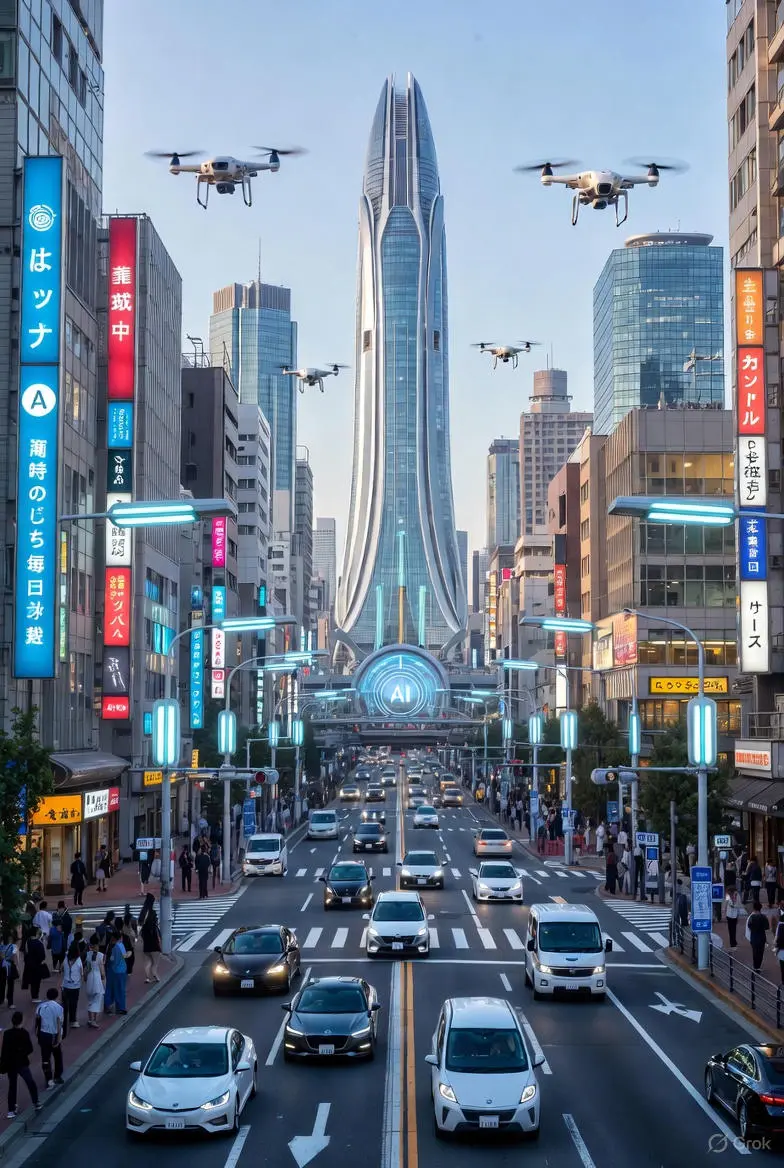
As artificial intelligence technologies advance, urban researchers are exploring how future systems might enhance city management and governance. While no cities are currently “AI-governed,” examining hypothetical scenarios helps identify both opportunities and challenges in applying technology to complex urban systems.
The concept of “smart cities” continues evolving as technology advances.
This analysis explores how future AI systems could potentially address
complex urban challenges through enhanced data analysis and coordination.
While current implementations focus on specific applications like traffic
management or energy optimization, examining more comprehensive scenarios
helps identify both technological possibilities and important considerations
around human oversight, ethics, and democratic governance in urban contexts.
Current Smart City Technologies & Research Directions
Today’s cities already incorporate various technologies that could be considered early steps toward more integrated urban intelligence:
🚦 Adaptive Traffic Systems
AI-powered traffic signal optimization that adjusts timing based on real-time traffic flow, reducing congestion and emissions in pilot projects worldwide.
⚡ Smart Energy Grids
Intelligent electricity distribution systems that balance supply and demand, integrate renewable sources, and optimize energy usage across urban areas.
📊 Urban Data Platforms
Centralized systems that collect and analyze data from sensors across cities to inform planning decisions and optimize service delivery.
These technologies represent incremental steps toward more integrated urban management, though significant gaps remain between current capabilities and comprehensive “AI governance.”
Research on AI in Public Administration
Academic and industry research explores how AI might enhance various aspects of urban governance:
| Application Area | Current Research | Future Possibilities |
|---|---|---|
| Resource Allocation | Optimization models for specific services | More comprehensive urban management systems |
| Infrastructure Planning | Predictive models for maintenance needs | Integrated urban development planning |
| Service Delivery | Chatbots for citizen information | More responsive public service systems |
| Emergency Response | Optimization of resource deployment | Enhanced predictive emergency management |
Ethical and Democratic Considerations
Key Governance Questions:
- Accountability: Who is responsible for AI-driven decisions in public administration?
- Transparency: How can complex algorithmic decisions be made understandable to citizens?
- Bias prevention: How to ensure AI systems don’t perpetuate or amplify existing inequalities?
- Democratic oversight: How to maintain meaningful citizen participation in AI-assisted governance?
- Value alignment: How to ensure AI systems reflect community values rather than just efficiency metrics?
These questions represent active research areas as cities explore how to responsibly integrate technology into governance while maintaining democratic principles and human oversight.
Human-AI Collaboration Models in Urban Management
The most promising approaches likely involve collaborative systems where:
🤖 AI Strengths in Urban Context
- Processing large volumes of urban data
- Identifying patterns and optimization opportunities
- Managing complex logistical coordination
- Providing consistent application of policies
- Modeling potential outcomes of different approaches
👥 Human Strengths in Governance
- Understanding complex human values and priorities
- Exercising ethical judgment in ambiguous situations
- Providing empathy and understanding in service delivery
- Making value-based trade-offs between competing priorities
- Maintaining democratic accountability and legitimacy
Effective urban governance of the future will likely combine these complementary capabilities rather than choosing between human or AI management exclusively.
Human Perspectives
“As an urban planning researcher, I see technology’s potential to help cities operate more efficiently and responsively. However, governance involves values, ethics, and community priorities that algorithms alone cannot adequately address. The most promising models involve technology augmenting human governance rather than replacing it.” — Yuki Tanaka, Urban Planning Researcher
“For citizens, technology already helps with accessing information and services. Future developments could make cities more responsive to resident needs, though maintaining human oversight and democratic accountability remains essential for legitimate governance.” — Dr. Kenji Sato, Public Administration Scholar
These perspectives highlight the importance of balanced approaches that leverage technology’s capabilities while maintaining essential human elements in governance.
Impact Analysis: A More Balanced View
- ⚡ Could potentially improve efficiency in urban service delivery and resource management
- 🌍 Might help address complex coordination challenges in growing cities
- 💡 May provide tools for better data-driven decision-making in urban planning
- 📈 Could enhance responsiveness to changing urban conditions and citizen needs
While potential benefits are significant, substantial challenges include maintaining democratic accountability, preventing algorithmic bias, ensuring transparency, and preserving essential human judgment in governance decisions affecting people’s lives.
Final Thoughts: Incremental Innovation in Urban Governance
Rather than expecting sudden transformation to fully automated urban governance, the most realistic path involves incremental innovation through balanced approaches. Technology will likely enhance specific aspects of city management while human governance continues providing essential judgment, ethical guidance, and democratic accountability.
The value of examining advanced scenarios lies in identifying both opportunities and limitations. By understanding what would be required for comprehensive AI governance, cities can focus current efforts on developing practical tools that address specific challenges while acknowledging complex aspects of governance that may remain fundamentally human.
Ultimately, improving urban governance will likely involve combining technological capabilities with human expertise, democratic processes, and ethical frameworks. This balanced approach offers the best chance of making cities more efficient, responsive, and livable while preserving essential elements of human judgment and democratic governance.
🧠 AIROBOT Analysis
This analysis highlights the gap between current AI applications in urban management and comprehensive “AI governance” concepts. While technology already assists with specific tasks like traffic optimization and resource management, autonomous urban governance involves complex human values, democratic principles, and ethical considerations that exceed current technological capabilities.
The most promising near-term applications involve augmenting human governance rather than replacing it: providing better data analysis, identifying optimization opportunities, and assisting with complex coordination tasks. These represent meaningful contributions even if they fall short of autonomous governance systems.
From a research perspective, focusing on achievable improvements—better urban data analysis, enhanced service coordination, improved resource allocation—while acknowledging substantial remaining challenges provides a realistic framework for technological development in urban governance contexts.
⏭ What Comes Next
Expect continued development of AI tools for specific urban applications: traffic management, energy optimization, infrastructure monitoring, and service coordination. These tools will likely become increasingly sophisticated while remaining under human oversight and democratic control.
Practical deployment will emphasize systems that assist rather than replace human governance. The most significant impacts may come from making cities more responsive to resident needs through better data analysis and coordination capabilities.
Long-term, incremental improvements in urban technology could collectively enhance city management, though comprehensive AI governance remains a distant prospect requiring advances across technological, ethical, and democratic dimensions.
🔥 Breaking Insight — Analytical Summary
Headline:
Urban Intelligence Evolution: Technology’s Growing Role in City Governance
Core Analysis:
Examining how future AI systems might impact urban governance reveals both promising possibilities and significant limitations. While current technology assists with specific urban management tasks, comprehensive governance involves complex human values, democratic principles, and ethical considerations that exceed current algorithmic capabilities.
Why This Matters:
Understanding both opportunities and limitations helps identify realistic priorities for urban technology development. The most promising path involves developing AI tools that enhance human governance rather than seeking to replace essential human elements of judgment, ethics, and democratic accountability.
Key Realistic Developments:
- Enhanced data analysis for better urban decision-making
- Improved coordination across city services and infrastructure
- Better resource optimization through predictive modeling
- Increased responsiveness to changing urban conditions and citizen needs
Expected Research Directions:
Continued focus on specific, manageable AI applications in urban contexts. Development of tools that make cities more efficient and responsive while maintaining human oversight. Emphasis on ethical frameworks and democratic accountability in urban technology implementation.
Final Perspective:
Improving urban governance will likely involve incremental technological enhancements combined with human expertise, democratic processes, and ethical frameworks. Rather than seeking comprehensive automation, the most effective approach may involve developing tools that address specific urban challenges while preserving essential human elements of judgment, values, and democratic governance.